
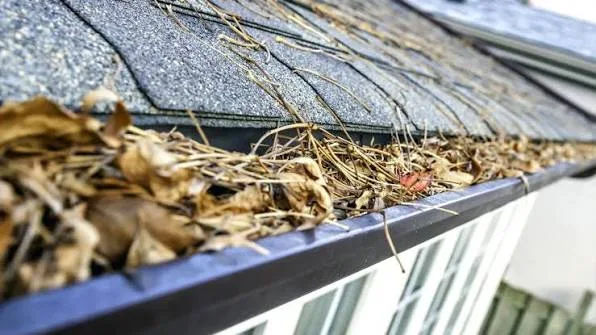
Most gutter problems can be patched, but some can’t. You likely need full gutter replacement rather than a repair if you’re seeing visible cracks or splits, gutters pulling away from the fascia, rust or corrosion, frequent overflow despite regular cleaning, or sagging, uneven sections. Any one of these means the system is failing structurally, not just clogged.
1. Visible Cracks, Splits, or Holes
A single small hole can sometimes be sealed, but cracks that run along seams, corners, or the length of a channel are a different story. Utah’s freeze-thaw cycle is the main culprit: water sits in the trough overnight, freezes and expands, then thaws the next afternoon — and that daily swelling stresses the material until it splits. Once you see more than one or two cracks, or cracking near multiple joints, sealant is a temporary fix on a system that’s already failing.
Aging aluminum and older galvanized steel gutters are especially prone to this after a decade or more of Utah winters. If cracks are widespread rather than isolated, replacement is almost always the more cost-effective path.
2. Gutters Pulling Away From the Fascia
Gutters are only as strong as what’s holding them up, and heavy Utah snow load puts real weight on hangers and spikes — especially along north-facing roof edges where snow lingers longest. When you see gaps between the gutter and the fascia board, or hangers spaced too far apart and visibly straining, it’s a sign the fasteners (or the fascia itself) have weakened.
Re-nailing a section can work if it’s an isolated spot with sound wood behind it. But if the pulling-away is happening in multiple places, that typically points to fascia rot or a system that was undersized for our climate to begin with — and repeated re-fastening won’t outlast the next big snow year.
3. Rust or Corrosion
Rust doesn’t stay put — once it starts, it spreads and eats through metal from the inside out, and no amount of touch-up paint reverses it. Steel gutters and older galvanized systems are the most vulnerable, particularly where standing snowmelt sits against the metal for days at a time during spring runoff.
Surface rust on a fastener here and there isn’t an emergency. But rust that’s created pinhole leaks, flaking along seams, or discoloration streaking down your siding means the material has already lost structural integrity in those spots. That’s corrosion, not cosmetic wear, and it’s a clear replace signal.
4. Frequent Overflow or Pooling, Even After Cleaning
If you’re cleaning your gutters on schedule and water still spills over the front edge or pools at the corners, the problem usually isn’t debris — it’s capacity or slope. Utah’s spring runoff sends a much higher volume of water through gutters in a short window than a typical rainstorm does, and undersized or improperly pitched gutters simply can’t move that much water fast enough.
Persistent overflow after cleaning is one of the clearest signs a repair won’t solve the underlying issue. It usually means the system needs to be replaced with correctly sized, properly sloped gutters built for the volume Utah roofs actually shed each spring.
5. Sagging Sections or Uneven Pitch
A gutter is engineered to hold a very slight, consistent slope toward the downspouts. When a section sags or the line visibly dips, water stops draining and instead sits — adding weight from standing water on top of whatever snow or ice is already loading the system. That extra weight accelerates hanger failure and can pull the whole run further out of alignment.
One sagging section might be fixable by re-hanging it. But sagging that shows up in multiple spots along the roofline is usually a sign of wood rot behind the fascia, fastener fatigue from years of freeze-thaw stress, or a gutter that was never installed with the right slope. At that point, replacing the run restores proper drainage instead of chasing the same fix year after year.
Frequently Asked Questions
How do I know if my gutters need repair or full replacement?
If the issue is a single clog, a loose hanger, or one small leak, repair is usually enough. If you’re seeing multiple cracks, widespread rust, repeated overflow after cleaning, or sagging in more than one section, those point to system-wide failure that repair only delays.
How long do gutters typically last in Utah?
Aluminum gutters generally last 20-25 years, while steel systems often show significant wear from freeze-thaw stress and snow load closer to 15-20 years. Homes at higher elevations or with heavy roof snow accumulation tend to see wear on the earlier end of that range.
Can seamless gutters reduce these problems?
Seamless aluminum gutters remove most of the joints where leaks and rust typically start, which matters a lot under Utah’s freeze-thaw cycles. They won’t eliminate every failure point, but they significantly reduce the cracking and seam separation that drives early repairs.
Does gutter replacement include the fascia, soffit, and downspouts?
It can, if those components are also damaged. Sagging or pulled-away gutters often expose fascia rot underneath, and a proper replacement addresses that structural layer at the same time rather than reattaching new gutters to compromised wood.
Is it worth replacing gutters before winter?
Yes, gutters already showing cracks, rust, or sagging are far more likely to fail under snow load than to survive it. Replacing before the first heavy snowfall avoids ice damming and water intrusion during the months when repairs are hardest to schedule.
Get a Free Gutter Assessment
If your gutters are showing more than one of these signs, a quick on-site look will tell you whether repair still makes sense or if it’s time to replace. Paramount Peaks installs gutter systems built for Northern and Southern Utah’s snow load and runoff, alongside matching trim, soffit, and fascia work when needed. Call 435.201.8222 for a free proposal, or reach out online to get on the schedule.